Motor Control Screen vs. YBT: What is the difference?
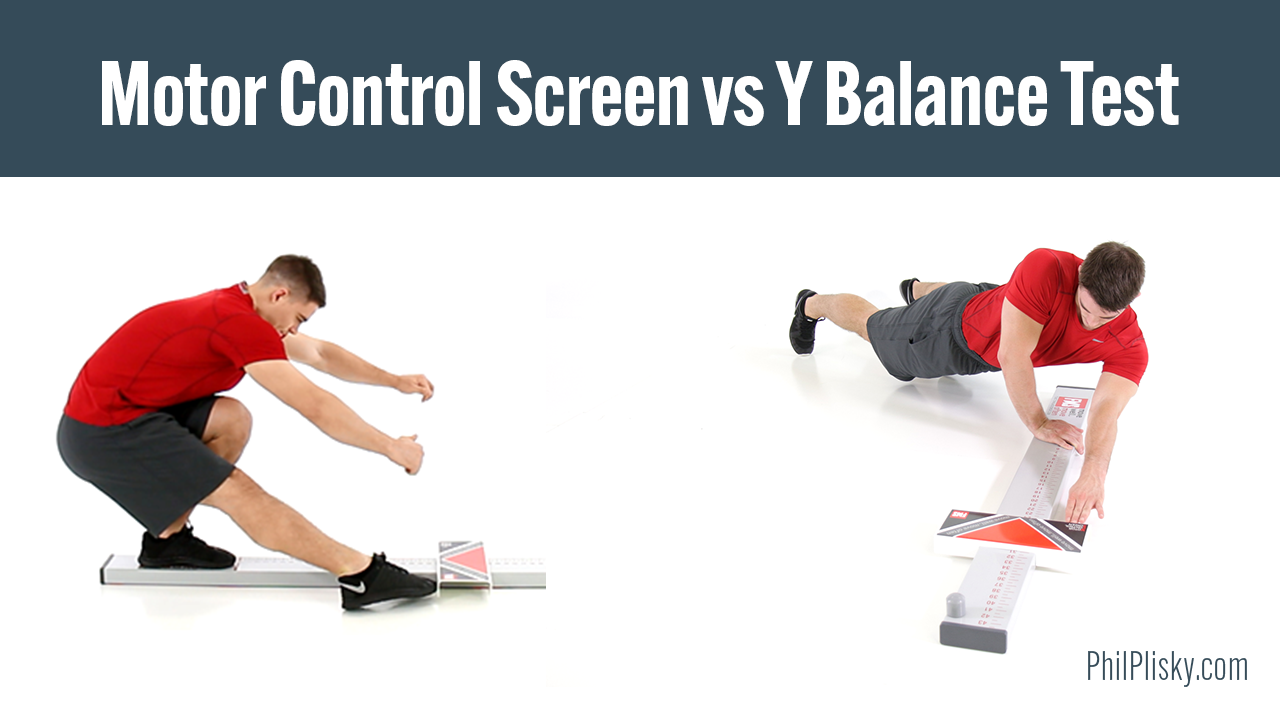
People see the Motor Control Screen (MCS) and the Y Balance Test (YBT) and ask, "What is the difference between the Y Balance Test and Motor Control Screen and when should I use them?"
Let’s look at the relationship between these two, because while they look similar, their roles in your with your athletes are totally different.
Is the Motor Control Screen (MCS) just a "New" Y Balance Test (YBT)?
Short answer: No. Think of it this way: The MCS is the check-engine light, while the YBT is the full diagnostic scan.
The MCS was actually born out of the YBT. We looked at a huge database of Y Balance Tests and numerous research studies to determine that the Anterior Reach (lower body) and Superior Lateral Reach (upper body) were incredibly powerful at capturing motor control deficits in less time.
- The Motor Control Screen quickly appraises how someone stabilizes and balances. It’s a screen.
- The Y Balance Test is a comprehensive test. It looks at multiple planes of motion and gives you a much deeper dive into how that athlete handles the limit of stability.
The MCS doesn't replace the YBT; it is a quicker appraisal of motor control than the Y Balance Test.
When do I use the Y Balance Test over the Motor Control Screen?
Use the Y Balance Test (YBT) for:
- Full Discharge/Return to Sport Testing: This is non-negotiable. The YBT is an essential component of the discharge checklist because it’s so comprehensive.
- Pre-season Screening: You want that detailed data to set your baseline and identify potential problems. That baseline can be used if someone gets hurt during the season.
- In Rehabilitation: If someone is already injured, they likely have motor control changes. You want the full picture that the YBT provides.
Use the Motor Control Screen (MCS) for:
- The Quick Feedback Loop: When you do a manual technique or a specific exercise, and you want to know right now if it worked. The MCS is fast enough to use as a "re-test" during your session.
- Entry to the Fundamental Capacity Screen (FCS): It’s designed to bridge the gap between movement and capacity.
Why the "Shoes On" and "Heel Down" Rules?
I know, it sounds like we're just making things complicated, but there is a good reason.
- Shoes On for MCS: The MCS is often done alongside the Functional Movement Screen (FMS) or the FCS. Both of those are "shoes-on" screens. We wanted the MCS to be a quick snapshot you can do without making the athletetake their shoes off every five minutes.
- Heel Down for MCS: Because the athlete has shoes on (which makes the test a bit easier) and we need to capture more deficits in one move, we make the criteria more stringent. Keeping the heel down captures those subtle motor control dysfunctions that might otherwise not be seen.
The Bottom Line
The MCS is for quick feedback during a session to see if your intervention is sticking. The YBT is your "gold standard" for making sure that the athlete is actually ready to get on the field.
If you want high-performance, you need a high-quality testing process.
So, here’s my challenge for you: Next time you're working with a patient and you finish a set of repatterning exercises, don't just ask them how it feels. Pull out the slide box and run a quick MCS. See if the needle actually moved.
How Do I Learn More About the Motor Control Screen?
The MCS is provided in the Appendix of the Online FMS Level 1 Course and in the Fundamental Capacity Screen Course or for the most comprehensive learning experience, sign up for the FMS Academy.